
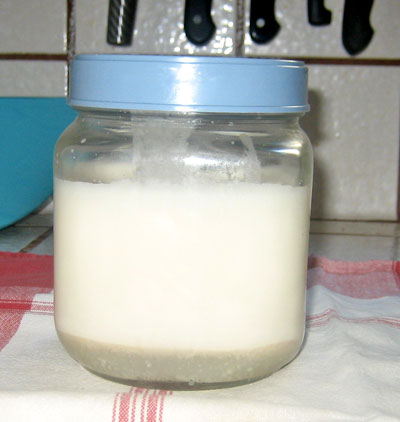
 A few weeks ago, the Chronicle Food Section ran a story by James Temple called Loving Lard. While noting the bad rep of lard, it focused on top restaurants that are using lard for its nutrition and flavor. It included a detailed history of cooking fat, as well, from lard to Crisco, to “the other white meat” and back to the present yearning for flavor, moist, flavorful pork and yes, lard.This came at an appropriate time, as there have been enough murmurings in the foodie community to raise my curiosity and desire to cook with lard myself; but I didn’t know where to start. Viola! The article, as well as educating me, told me where to go.At the Golden Gate Meat counter at the Ferry Building on Saturday morning, I asked a butcher if they had lard. “Do you want the leaf lard?” he asked. Remembering something about leaf lard being the best, I said yes, and he handed me a shrink-wrapped packet of white matter, about two pounds.When I got home, I whacked off a bit and melted it to fry some potatoes for breakfast. Yum.I re-read the article and learned that my leaf lard needed to be rendered, a simple, but two-day process. This is what it looks like.

leaf lard comes from the area around the abdomen and kidneys
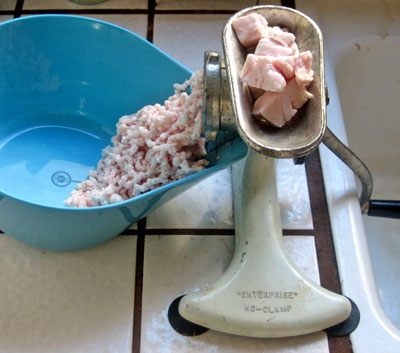
my meat grinder handed down from my mother… or perhaps her mother



 eats for one
